Showing posts with label Writing. Show all posts

Most Wanted: 40k Bad Guys

OUT NOW

The short story Cold Light of Day

_______________________________________________________


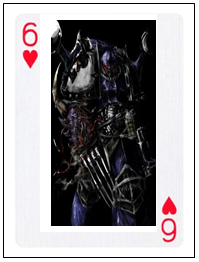
Bad guys are important. How can your heroes lift the heart or inspire the reader with their triumphs if their antagonists and opponents are a disappointment? Where is the dramatic tension? Conversely, bad guys can be extremely fun to write for - the author delighting in the opportunity to convincingly flesh out the monster behind the mask. Background can be interesting and models can serve as avatars on the table top but it is in fiction that bad guys truly come to life. Here are ten bad guys and their realisation in my fiction. The 40K 'Most Wanted' playing cards give you some indication of their perceived threat to the 40k universe. See if you agree.


Antagonist: Chaos Space Marines
As seen in: the novel Legion of the Damned


Antagonist: Renegade Space Marines
As seen in: the short story Bring the Night


Antagonist: Chaos Daemons
As seen in: the short story A Deeper Darkness


Antagonist: Eldar
As seen in: the novel Atlas Infernal


Antagonist: Orks
As seen in: the novel Redemption Corps


Antagonists: Necrons
As seen in: the short story Spirit War


Antagonists: Genestealers
As seen in: the short story Necessary Evil


Antagonists: Dark Eldar
As seen in: the short story Shadow Play


Antagonists: Heretics
As seen in: Army of One


Antagonist: Tyranids
As seen in: the audio drama The Path Forsaken


_______________________________________________________

' "You'll find vermin in every ship's hold from here to Tobaro," Charnoslav informed her. "The warpstone must have changed them. They grew, and they grew hungry." '
-Cold Light of Day

If Music Be the Food for Thought

OUT NOW

The short story 'Bring the Night' in

_______________________________________________________


How did authors ever get on without the internet? It makes instant experts of us all. Virtually everything is described and presented in images and diagrams for swift elucidation. This is an incredible boon to an author, who has all the libraries he or she is ever likely to consult at their fingertips. Images and art inspire authors in their depictions and are particularly useful in helping authors visualise people, places, objects and a million other things besides.

I like lots of stimulus when I writing. I'm not one of those go lock yourself in a silent room or spent the Summer in a remote cabin kinds of authors. I'm happy to have people around me while I'm writing. I write with my wife and children around me. I write in crowded cafes. I have even snatched an hour or two between seminars and signings at events, surrounded by authors and editors.

The one concession I make to isolating my thoughts is headphones. Music is a polite, little shower curtain I draw about myself when writing. I'm listening to music right now as I type this. I'm not saying I can't write without music but I certainly find it helps - and for more than just providing a barrier. I often try to match the feel of the music to what I am writing - in tone at least and not just content. This works particularly well with film, television, trailer and game soundtracks where an emotional architecture has already been built into the tracks. I find that great music can really help to lift the composition of a scene, description or interchange.

I recently asked around on social media for suggestions and am compiling a list of great tracks and soundtrack albums. I know that there are fantastic tracks out there that I haven't heard or perhaps just forgotten. I would welcome any further suggestions on Facebook, Twitter or in the comments section of the blog. As a reminder, you can join me on any or all of these by Liking, Following or Joining using the buttons on the side bars. The more the merrier. In return I thought I might share a few favourites of mine here. Tracks that I think are amazing for setting a certain tone of mood. Rather than go Space Marine-bombastic I thought I might present some more thoughtful tracks that build and gain a momentum in their different ways. Tracks that really carry you alone as you are writing.

So, my Top 20 thoughtful tracks, in no particular order. The trick is to ignore the context. Some are from fantastic films and some from poor ones. Try to divorce the music from its source and enjoy it as is. No analysis or information. I'll let the music speak for itself. Further great suggestions might change this selection, of course!


1. 'Song for Bob' by Nick Cave and Warren Ellis from 'The Assassination of Jesse James by the Coward Robert Ford'.


2. 'Journey to the Line' by Hans Zimmer from 'The Thin Red Line'.


3. 'Promontory' by Trevor Jones and Randy Edelman from 'The Last of the Mohicans'.


4. 'Comptine d'un Autre Été: L'Après Midi' by Yann Tiersen from 'Amelie'.


5. 'Elegy' by Lisa Gerrard and Patrick Cassidy from the 'Man of Steel' trailer.


6. 'Wilson, I'm Sorry' by Alan Silvestri for 'Cast Away'.


7. 'Krypton's Theme' by John Williams for 'Superman: The Movie'.


8. 'Any Other Name' by Thomas Newman from 'American Beauty'.


9. 'The Departure' by Michael Nyman from 'Gattaca'.


10. 'Crossing the Atlantic' by John Williams from 'Amistad'.


Click HERE for Tracks 11-20.

_______________________________________________________

'We deal in dread...'
from Bring the Night in Renegades of the Dark Millennium.

If Music Be the Food For Thought 2

OUT NOW


_______________________________________________________


11. 'Drive Away' by Thomas Newman from 'A Series of Unfortunate Events'.


12. 'The Last Message / A particularly Beautiful Day' by John Murphy from 'Sunshine'.


13. 'London' by James Newton Howard from 'Blood Diamond'.


14. 'First Sleep' by Cliff Martinez from 'Solaris'.


15. 'Godspeed' by Klaus Badelt from 'The Time Machine'.


16. 'Good to Go' by Alan Silvestri from 'Contact'.


17. 'Chevalier de Sangreal' by Hans Zimmer from 'The Da Vinci Code'.


18. 'Trailer song' by Giles Lamb from the trailer for 'Dead Island'.


19. 'Finale' by Trevor Morris from 'The Tudors'.


20. 'Time' by Hans Zimmer from 'Inception'.


_______________________________________________________


'What must I do beyond the ease of killing, to get the attention of these daemon deities? These dogs of damnation?'
Archaon: Everchosen

Have You Seen This Man?

OUT NOW


_______________________________________________________


First off, an apology. It’s not nice when something just stops. A film. A relationship. A life support machine. I haven’t updated this blog in over a year. The year before that made I regular appearances here. The reasons for my absence are largely interrelated. There is no one thing that’s kept me away. I changed from being a teacher and author to a full time author. While this is fantastic, it meant a lot of extra hard work to ensure that my students and my department were left in a good place. At the same time I planned to move websites. I still intend to do this at some point but my neglect of this site was a little premature. The main reason I have been away, however, is simply hard work. I’ve been working on a plethora of short stories, audio dramas, novellas and novels – some that are out, some that are just coming out and some that are as yet to be released. I’ve also been hard at work creating new writing opportunities in new formats, which I look forward to telling you about.

Like a sequel that comes to be regarded as better than the original (I’m thinking The Empire Strikes Back or Aliens here), the blog has returned. My aim is to work as hard, or even harder, than I have been doing on my creative ventures but also to maintain a healthy commitment to the blog. To begin that I’ve given it a much needed streamline and overhaul, embracing clean whites and blues over the rather sombre black and orange theme I had going on before. It contains all the great material of its first incarnation – some highlights of which you’ll find still trending on the side bar list in my absence. Fairly swiftly I’ll be adding to it with news of new releases, long-standing questions answered (a special sorry to the faithful of the ‘Ask the Author’ section), reviews and features. I might also be able to make better use of social media than I have done in the past but no promises. Crawl. Walk. Run.

Finally, welcome back to friendly and familiar faces and a big hello to fresh ones. If you feel so inclined, I encourage you to follow me, my work and the blog in a number of ways. You can join this site on the right hand bar. You can Like my author Facebook page above on the right. You can follow my Twitter feed, also up on the right hand bar. Hell, do all three. Also, feel free to ask questions (as long as it's not the one about where babies come from) and comment on the blog itself. On the left hand bar I've placed my list of sites and blogs deserving of attention. These are sites maintained by readers who have usually found their way there by attracting my attention with reviews and interviews. If, on the other hand, you would like to add my blog to your own list - as many have - that would be cool too. So, let's begin...

_______________________________________________________


'What must I do beyond the ease of killing, to get the attention of these daemon deities? These dogs of damnation?'
Archaon: Everchosen

What's in a Name?


Moving onto a couple more questions that have been waiting for me in the Ask the Author section – both relating to choices of names in Legion of the Damned.

“Reading through Legion of the Damned currently. What is the origin of "Santiarch"? At first I thought it was the chaplain's name, but now it appears to be a title of sorts?”

and

“In other news, now that Legion of the Damned is in my (digital) possession, I'm happy to report it's being thoroughly enjoyed so far. (And from what others have said hereabouts the initial reactions seem to be impressively positive.) More'n that, I can't stress enough my appreciation for what you've mentioned in your previous response: the time taken to add in a detail. But in any case, it's thoroughly enjoyed in the reading, even though I'm only still just starting the book. Also, Ichabod's a cracking name for a space marine.”

Thanks guys. Both these questions relate to names and the naming of things. I take names very seriously. Nothing creates a sense of character more than a name. Nothing creates a sense of a location or (as in science fiction) a place removed, than the names of your characters. In answer to the first – the name or title Santiarch really came from mixing the titles Reclusiarch and Master of Sanctity. Although the codexes are a good guide, they cannot possibly cover the individual terms and cultural differences of thousands of Space Marine chapters. These chapters are going to call different things different names and titles. The trick here is verisimilitude. It must sound like something that already exists but actually be something new. This both interests the reader but confirms expectations. Authors want readers that are kept entertained by detail as well as plot, but at the same time don’t want to confuse them. In a science fiction setting, it is surprisingly easy to lose readers. Something that appears concrete and obvious in your mind sometimes simply isn’t conveyed as well as it could be in the words you have selected and the reader finds it difficult to make the split-second connection you need them to. Personally, I prefer Santiarch to both of the original terms – but I’m biased.

This relates nicely to the mention of detail in the second question. I feel that fictional worlds should be rich. If you are going to invite readers into another world (as with science fiction, fantasy or perhaps even historical fiction) the least you can do is furnish the damn place with interesting detail and descriptions. There are some readers – and authors – who don’t like doing this. This is fair enough. We live in a time heavily influenced by televisual formats. If you ever read books on how to write scripts and screenplays, you will see the same thing. The use of even single adjectives is frowned upon. Straightforward mentions of colour, size or emotion are denounced (by authors – who think everyone should write like them and even readers who aren’t writers) as what people like to term purple prose. This is a ridiculous term. There is prose. Good prose. Bad prose. Readers can enjoy both but there is not a cast iron rulebook about what writers can and cannot do. It seems the fashion today, however, to write bland and featureless prose. This fashion seems to have taken over fiction writing also – even though it is totally misplaced. Everything is cut down to its barest essentials. This is fine for screenplays – but I don’t write screenplays. One of the reasons that many writers don’t bother with detail is because it’s one of the most difficult things to manage in fiction. It requires one hell of an imagination to create worlds even down to the change in your character’s pockets and some writers simply aren’t up to it. Either that or they can’t be bothered to convincingly furnish their fictional worlds. So they use short cuts like not including any detail at all and denounce any that do as writers of purple prose. I personally think that this ‘short changes’ the reader. Most readers would rather read detailed and well-crafted descriptive prose than a failed script masquerading as a novel.

In respect to the name Ichabod and the names of the different Excoriators, I chose to give them a common origin. The Excoriators all share a similar culture and so it helps if their names sound like they share a quality of some kind. Authors can just make names up but I tend to resist that unless the name has a particular phonetic sound that I want. In the case of the Excoriators I went largely for biblical sounding names. This gives all of the characters a unity that is appreciated by the reader – even if it is only an unconscious appreciation. In the reader’s mind everything seems to fit – and this is a good thing because it contributes to wilful suspension of disbelief (which authors cannot do without!)

First Commands

This is a blog about Speculative Fiction: chiefly mine – and so I don’t tend to wander off topic very often. I have a range of interests and science fiction and fantasy is but one of them. I also don’t tend to use the blog very often for random musings on day-to-day happening or the meaning of life. Today is a little bit different because today was my last day in my old job. While still remaining a part-time teacher, today was the last day of being Head of English in a secondary school. It was a nice, quiet day and I had lots of time to reflect on my achievements and those that have worked so wonderfully about me. I must make a special mention of Tracy. I am fortunate enough to work with my wife. We are very close and as well as being a married couple, we are also parents to our children, best friends and colleagues working in the same school. I have been Head of Department for five years and have enjoyed a lot of success but I can honestly say that none of it would have been possible without her. I owe her everything.

This is all relevant to the blog in so much as a while back I made a very important decision to step back my commitments to teaching and throw myself into writing. I’m a very good teacher – even if I say so myself – but I have always wanted to be a writer. It is my dream job and I owe it as much of my time and energy and I can reasonably give.

I began this post by saying that this is a blog about Speculative Fiction. So, in honour of my final day, here are my Top 5 Science-Fiction captains who, at one time or another, bid farewell to their commands.


5. Commander David Bowman - Discovery One


4. Captain Malcolm Reynolds - Serenity


3. The Doctor - The TARDIS


2. Captain Han Solo - The Millennium Falcon


1. Captain James T. Kirk - The USS Enterprise


"Good Enough For Shakespeare"

This caught my eye. It is from a newspaper article by journalist Mathilda Gregory. It's nice to see "fanfiction" writers get a bit a love and respect.

"Fanfiction, playing with characters and worlds already created elsewhere, can be a thrilling creative outlet for all kinds of people. The most enjoyable works of fiction present us with convincing worlds; we believe our favourite characters existed before "once upon a time" and go on existing after the final full stop. It's not surprising then, that the best stories can be irresistible playground to some writers. Yes, quality varies. A lot of fanfiction is, indeed, terrible: it's amateur fiction published, unedited online. What were you expecting? But, like any kind of literature, fanfiction can be sublime or ridiculous. There are some real gems out there, that are every bit as original as works with no previous owners.

Isn't it time we gave the art of remixing stories it a little more respect? After all, it was good enough for Shakespeare."

Bad Sex

Some of you following this blog will know that I have spoken in the past on the merits and issues associated with horror writer Stephen King. He has undoubtedly written some enjoyable and genre-defining novels and deserves his place as the ‘King’ of Horror. I am less appreciative of his writing-by-numbers approach to the creative process - which might be fine for King – but unhelpfully prescriptive for others. I am immediately distrustful of writers who dictate rules for other writers and artists. These rules seem totally ignorant of the literary and cultural developments of the past fifty years: poststructuralism; postmodernism; post-anything. What century did King think he was in when he postulated such unbreakable rules? This is discussed in greater depth here.


Personally, if you’re going to follow anybody’s advice, you might as well follow William Goldman’s famous declaration that ‘nobody knows anything!’ Something that Stephen King seems to know a little about is writing a bad sex scene, apparently. He has been nominated for this year’s ‘Bad Sex in Fiction Award’, awarded to one writer each year in order to (according to The Literary Review) "draw attention to the crude, tasteless, often perfunctory use of redundant passages of sexual description in the modern novel, and to discourage it". King has been nominated for his time-travel romance, 11.22.63.

Everything You Need To Know About Writing Successfully In Ten Minutes 2


I’m looking at Stephen King’s popular essay on writing, referenced in the post title above. King is an extremely influential writer but I feel that the advice he gives out to writers, and people on the road to being writers, often comes in the form of unbreakable rules. This approach is unhelpful and a kind of literary snobbishness. In doing so, King attempts to establish a kind of hierarchy in which he naturally places himself at the top. He ignores the possibility of a multitude of successful approaches to writing and fails to explain the existence of writers who have had more success than himself without using his rules. Also, sometimes he is just plain wrong. As I believe in the plurality of voices, I should not deny King his own. This is his take on the tools of the writer’s trade: dictionary, thesaurus and encyclopaedia.

Rule 5. Never look at a reference book while doing a first draft
You want to write a story? Fine. Put away your dictionary, your encyclopaedias, your World Almanac, and your thesaurus. Better yet, throw your thesaurus into the wastebasket. The only things creepier than a thesaurus are those little paperbacks college students too lazy to read the assigned novels buy around exam time. Any word you have to hunt for in a thesaurus is the wrong word. There are no exceptions to this rule. You think you might have misspelled a word? O.K., so here is your choice: either look it up in the dictionary, thereby making sure you have it right - and breaking your train of thought and the writer's trance in the bargain - or just spell it phonetically and correct it later. Why not? Did you think it was going to go somewhere? And if you need to know the largest city in Brazil and you find you don't have it in your head, why not write in Miami, or Cleveland? You can check it ... but later. When you sit down to write, write. Don't do anything else except go to the bathroom, and only do that if it absolutely cannot be put off.


Seems like good advice, delivered with a confidence that selling thousands and thousands of books can lend you. There are problems, however, and I draw attention to these not because I dislike King’s writing or fail to rate him as a writer. King’s advice is oft-quoted on the internet and in the kinds of ‘How To...’ books that many burgeoning writers have consulted at the beginnings of their careers. His advice is then presumably followed by many people who, if they had been allowed to follow their own path, might have generated something unique and exciting. Advice can be over-rated. To quote the Sunscreen song, “Advice is a form of nostalgia, dispensing it is a way of fishing the past from the disposal, wiping it off, painting over the ugly parts and recycling it for more than it’s worth”.

One of King’s assertions that I believe to be unnecessarily brutal is the authoritative indication that, “Any word you have to hunt for in a thesaurus is the wrong word. There are no exceptions to this rule.” (Oops, Jon – that’s you and me gone!) I just do not buy this one at all. It’s like stripping a professional photographer of their lens attachments or a painter of their mixing palette. Use a thesaurus or don’t use a thesaurus – whatever gets the job done for you personally – but you can’t tell writers that they can’t use one: that any word used from one is “the wrong word”. For King, beyond it being “wrong” and there being “no exceptions”, it seems the main problem is the idea that writers may break their “train of thought”, their “writer's trance”, if they have to get up and go a search out a word in a thesaurus or consult a fact in an encyclopaedia. This sounds like it makes sense but it doesn’t take into account the significant consideration of requirements particular to King: the ironic suggestion that King might be a poorer writer than his peers in comparable circumstances. New Historicism is an important branch of literary theory that has received increasing attention over the last thirty years. New Historicists claim that, regardless of the individual talent of the writer, texts are products of the circumstances in which they were written. These circumstances might be broad and influential, like political or social ideas that find a voice in texts written at the same time as their appeal. Examples of this might be the tensions between Protestants and Catholics represented in plays by Shakespeare four hundred years ago to the global economic meltdown represented in fictional form today. ‘Historical’ circumstances don’t have to be so broad: they can be intensely personal. Events occurring in an individual writer’s life can therefore have a huge effect on their writing.

How does this relate to King? He tells us himself that he has to “hunt for”, “look it up” and “go” when doing anything that takes him away from what he defines as the writing process. You can almost see him getting up and rooting around his house, or at least his bookshelf, for his thesaurus. Actual writing for Stephen King is done, “When you sit down”. It suggests that he needs this unbroken concentration to write. This shouldn’t surprise us (from a New Historicist point of view) since it is well known that King wrote his early fiction - Carrie for example - in a caravan, on a manual typewriter.

We can see that King’s insistence on not using a thesaurus might come from two factors. Firstly, his initial writing experiences benefitted from a pattern of behaviour that included a sense of isolation – shutting himself away in a caravan and getting the job done undisturbed. Given what we know about King’s early poverty (making his own personal story all the more appealing) it wouldn’t be unreasonable to suggest that he did not own all of the reference books he cites as belonging in the “wastebasket”. If he started out that way in the 1980s and generated some success from that approach, you can see why he feels he has not needed them subsequently. The second factor is technology. Most writers that came after King do not use manual typewriters. They use word processors and now have the benefit of the internet, where there is very little hunting for reference books required. Modern writers do not need a trip to the library or have to turn over their houses to find an encyclopaedia, to validate a fact or piece of information. Every reference source a writer might ever want (and many they won’t) is there at their fingertips, with very little to break their “train of thought”. Many modern writers have to maintain the “writer’s trance” while carrying out other activities or surrounded by their families in busy households. Many do not have the ‘luxury’ of an isolated caravan or cabin in the woods to retreat to every time they wish to write.


I do not intend to criticise Stephen King. He is undoubtedly a successful writer of clear skill. His advice, on the other hand, can be dangerous when taken out of the context in which it was given. King cannot be considered without bias. What works for King might not work for other writers. What works for other writers might not have worked for King. The biggest danger comes not from writers emulating King’s approach: it is everyone else accepting it unquestioningly. If everyone involved in the process, from the publishing industry to the readers, believe that good writing comes from stripping out texts of anything that might have come been found in a thesaurus - the “wrong” words as King puts it – then all novels will start to sound like screenplays and schematics. It is interesting to note that Stephen King himself has had a long standing interest in such writing – insisting on writing the script adaptations for his own novels. Writers at the beginning of their careers are often warned not to allow their texts to become ‘overgrown’ with adjectives and adverbs etc, the suggested image here being a crowded garden. There is something in this: you can have too much of even a good thing. On the other hand, ‘gardens’ stripped of any descriptive prose and devoid of thesaurus-consultation might be considered concreted over and bare. They are economical and easy to maintain but they are not places people wish to spend their time. They do the job but they lack ambition and beauty. I find it hard to believe that these are the equivalents of ‘good’ writing. The kind of writing, of which Stephen King in the 1980s, might have approved.

Everything You Need To Know About Writing Successfully In Ten Minutes


This is the title of a famous essay on writing by Stephen King. The essay largely takes the form of a list: the dos and do nots of creative writing. I’m not a fan of such lists. Some writers – even professional writers, with many years of experience – swear by them. Like anyone interested in writing, I have read many of these lists. Some are moderately helpful. Some are absurd.

King is undeniably a successful writer, although it is fair to say that his heyday was the 70s and 80s. He has a great deal to say about fiction and is much quoted on the subject of writing. My background is in Literary Theory, so I have a difficult time believing in the fixed, concrete nature of such an approach. It feels very much of a remnant of a bygone age. A postmodernist / poststructuralist approach to King’s writing rules and regulations, immediately undermines his absolute belief in a particular set of rules, since the dominating literary philosophy of the postmodern period prioritises the playfulness of creative approaches, the breaking of rules and the resistance of authority structures. We are doing things in fiction, film and art that ‘creatives’ before us would never have done, for fear of it breaking some kind of unbreakable convention. King’s essay is very much in that model.

There are, even in the essay, hints that King is uncomfortable with such an approach. King claims, as part of his rules regarding How to Evaluate Criticism:
“Show your piece to a number of people - ten, let us say. Listen carefully to what they tell you. Smile and nod a lot. Then review what was said very carefully. If your critics are all telling you the same thing about some facet of your story - a plot twist that doesn't work, a character who rings false, stilted narrative, or half a dozen other possibles - change that facet. It doesn't matter if you really liked that twist of that character; if a lot of people are telling you something is wrong with your piece, it is. If seven or eight of them are hitting on that same thing, I'd still suggest changing it. But if everyone - or even most everyone - is criticizing something different, you can safely disregard what all of them say.”

I have some respect for this facet of King’s insight, but within it are the seeds of the essay’s failure. We could take King’s list and those of many other writers and we would find many different pieces of advice, some even contradictory. This was, of course, always going to be the case. Why write a new list unless there is something different to add. Since, according to King’s own advice, “if everyone - or even most everyone - is criticizing something different, you can safely disregard what all of them say.” This means that we have to ignore King’s own advice: very postmodern.

Regardless of this – or perhaps because of it (King becomes a more interesting prospect when examined in this way) I would like to look at a number of King’s rules in subsequent blog entries. They are widely quoted and regarded as creative writing gospel: I would like to look at aspects I believe to be helpful to writers and those approaches that have clear deficiencies – despite the ardent fashion in which King and many other writers adhere to them.

Musings


I’m currently writing my second book for Black Library and recently got to thinking about the creative process. Many readers of speculative fiction find the creative processes of writers interesting – as evidenced in the success of events like BL Live and Games Day. If the creative content of the BL forum over the years is anything to go by, many of those readers wrangle with those creative processes themselves in their own fiction. With the return of the Black Library website and fresh submission guidelines, this interest and enthusiasm is due to for a resurgence. Beyond being a novelist, my background lies in literature and I’ve always been passionate about books and the ‘creative’ forces that ‘create’ them – literally something from nothing. I’ve considered doing many things with this blog, beyond helping to advertise my work. One thing I would really like to do is share this passion and explore this world in a little more detail. Here goes.